Recycling and Sustainability at West Hampstead Removals
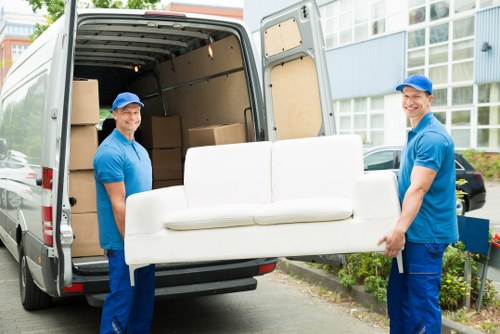 At West Hampstead Removals, sustainability is not treated as an add-on; it is built into the way every move is planned, packed, transported, and cleared. Our approach to removals recycling focuses on reducing waste first, reusing where possible, and sending only the smallest practical amount to disposal. We aim to achieve a minimum recycling rate of 92% across suitable move-related materials, including cardboard, paper, metal, wood, and selected plastics. That target is reviewed regularly so our West Hampstead removals service continues to improve year on year.
Because the local area is closely connected to several borough waste systems, our team works in step with the way neighbourhoods separate rubbish, dry mixed recycling, and reusable household items. In practice, that means more careful sorting at the point of collection and smarter routing of materials to the right facilities. Our sustainable removals process helps ensure packaging, offcuts, and unwanted furniture are handled responsibly rather than being mixed into general waste.
We also plan every move around the most efficient local disposal options. By using approved transfer stations in and around northwest London, we can direct recyclables to facilities designed for bulk sorting and onward processing. This reduces unnecessary mileage and supports a cleaner chain of custody for reusable and recyclable items. It is a practical step that strengthens our wider West Hampstead Removals sustainability strategy.
Local transfer stations play an important role in keeping the recycling process efficient. Materials collected from moves often include dismantled wardrobes, broken flat-pack furniture, and protective wrapping, all of which can be separated before final processing. Wood is diverted where appropriate, metals are recovered for reprocessing, and clean cardboard is baled for paper mills. In boroughs with strong waste-separation rules, this sort of sorting mirrors the area???s own emphasis on separating dry recycling from residual waste.
Our team also prioritises reuse partnerships with local charities and community organisations. If items are in good condition, we look for opportunities to donate them rather than recycle them straight away. Sofas, tables, kitchenware, books, and small electricals may be suitable for charity redistribution, helping households, community projects, and low-income families benefit from items that would otherwise be discarded. This reuse-first approach is central to responsible removals recycling.
 Where items cannot be reused, we separate them carefully so they can enter the correct recycling stream. Packaging films, bubble wrap, and protective materials are assessed for recyclability; cardboard boxes are flattened; and any metal fixtures removed from furniture are collected for recovery. This attention to detail is especially useful in dense urban areas, where household moves often produce a wide mix of materials that need sorting quickly and correctly. It is one of the ways West Hampstead Removals supports lower-waste moving.
Low-Carbon Vans and Smarter Transport
Transport is a major part of any removals service, which is why we operate a fleet of low-carbon vans designed to reduce fuel use and emissions. These vehicles are selected for efficiency, maintained to a high standard, and routed with care to avoid unnecessary idling and congestion. For West Hampstead removals, this matters because shorter, smarter journeys can make a meaningful difference across a busy local network.
Our scheduling also supports sustainability. By grouping nearby collections where possible, we cut duplicate trips and improve load efficiency. A van that is properly packed and travelling on a planned route uses less fuel per item moved, which supports our wider commitment to low-emission removals. We also encourage staff to use best-practice driving habits, helping reduce wear, waste, and emissions over time.
At the same time, we make sure that sustainability never compromises service quality. Delicate items, bulky furniture, and mixed household contents are still handled with the care expected from a professional removals team. The difference is that every stage is considered through a greener lens, from the first pack of cardboard to the final drop-off at a transfer station or charity partner.
How Recycling Works in Practice
 In everyday operations, our West Hampstead Removals recycling process starts on-site. Teams separate reusable goods from recyclable packing materials as items are loaded, which keeps contamination low and improves the chance that materials can be processed correctly. In boroughs with clearly defined collection categories, this mirrors the local habit of separating paper and card, mixed recycling, food waste, and non-recyclable waste at source. That borough-style separation helps us send the right material to the right place.
We also pay attention to materials commonly generated during house moves in the area. Strong cardboard boxes, paper wrap, old hangers, wooden bed frames, and metal shelving can often be recycled or recovered if they are sorted properly. Even small actions, such as removing tape from cartons or grouping similar materials together, can increase the amount that remains in the recycling stream. It is a simple but effective way to support sustainable removals in a busy neighbourhood.
For items that are unsuitable for reuse or standard recycling, we aim to send them through compliant waste-handling channels with the lowest practical environmental impact. That means using trusted local facilities, keeping material flows documented, and choosing routes that minimise extra driving. The result is a more accountable process that aligns with modern expectations for recycling in West Hampstead and the wider area.
A Greener Moving Experience
 Our sustainability goals are not fixed in place. We continue to review recycling performance, donor-partner outcomes, and vehicle efficiency so our service becomes cleaner and more resource-conscious over time. The 92% recycling target gives our team a clear benchmark, while ongoing partnerships with charities and local transfer stations help us put that benchmark into action. This combination of reuse, recovery, and efficient transport defines the direction of West Hampstead Removals.
For customers, this means a move that is organised, practical, and considerably less wasteful than a standard clearance approach. Furniture with life left in it can help another household through charity donation, cardboard can be recycled into new packaging, and transport emissions are reduced through low-carbon vans and smarter route planning. In a borough landscape that already values waste separation and recycling discipline, our approach fits naturally into local expectations.
 By focusing on reuse first, recycling second, and disposal last, West Hampstead Removals offers a moving service that reflects modern sustainability priorities. Whether handling a single flat move or a larger property clearance, we aim to keep materials in circulation for as long as possible and reduce the environmental burden of moving day. That is the heart of our recycling and sustainability commitment: practical, measurable, and designed to support a greener local community.